Modern gynaecological treatments have evolved significantly over the years, making surgeries safer, less painful, and quicker to recover from. One of the most advanced techniques used today is laparoscopic surgery in gynaecology. Often referred to as minimally invasive gynaecology, this procedure allows doctors to diagnose and treat several gynaecological conditions using small incisions instead of large surgical cuts.
Women dealing with issues such as ovarian cysts, fibroids, endometriosis, infertility, or chronic pelvic pain are increasingly choosing laparoscopic surgery because of its faster recovery and lower risk of complications.
In this article, we will explore what laparoscopic gynaecological surgery is, its benefits, recovery process, and when you may need it.
What Is Laparoscopic Surgery in Gynaecology?
Laparoscopic surgery is a minimally invasive surgical procedure performed using a thin instrument called a laparoscope. The laparoscope contains a camera and light source that help surgeons view the internal organs on a monitor without making large incisions.
During the procedure, small cuts are made in the abdomen through which surgical instruments are inserted. Carbon dioxide gas is used to gently inflate the abdomen, providing better visibility for the surgeon.
This technique is widely used in gynaecology to diagnose and treat various reproductive health conditions.
Conditions Treated with Laparoscopic Gynaecological Surgery
Gynaecologists commonly recommend laparoscopy for several medical conditions, including:
1. Endometriosis
Laparoscopy helps identify and remove endometrial tissue growing outside the uterus, reducing pain and improving fertility.
2. Ovarian Cysts
Large or painful ovarian cysts can be removed safely through minimally invasive surgery.
3. Uterine Fibroids
Certain fibroids causing heavy bleeding or pelvic discomfort can be treated laparoscopically.
4. Ectopic Pregnancy
A pregnancy occurring outside the uterus may require immediate laparoscopic intervention.
5. Pelvic Adhesions
Scar tissues inside the pelvic region can be removed to relieve pain and improve organ function.
6. Infertility Evaluation
Laparoscopy helps doctors identify blocked fallopian tubes, endometriosis, or other fertility-related problems.
7. Hysterectomy
In some cases, removal of the uterus can be performed laparoscopically with smaller incisions and faster healing.
Benefits of Laparoscopic Surgery in Gynaecology
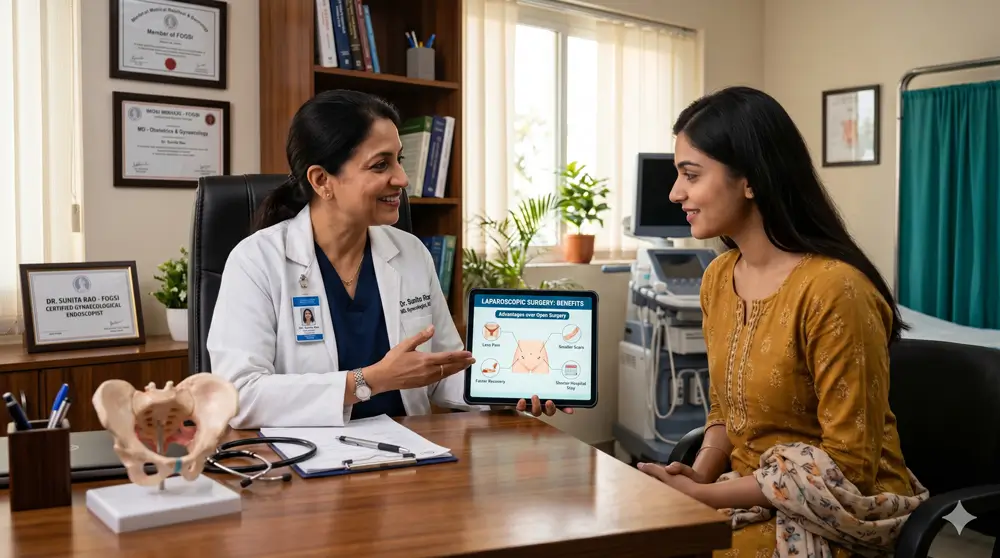
Laparoscopic procedures offer several advantages compared to traditional open surgery.
Smaller Incisions
Tiny cuts reduce visible scarring and improve cosmetic outcomes.
Less Pain
Patients usually experience less post-operative pain because the procedure causes minimal tissue damage.
Faster Recovery
Most women recover quicker and return to daily activities sooner than with open surgery.
Reduced Hospital Stay
Many laparoscopic procedures require only a short hospital stay, and some are even performed as day-care surgeries.
Lower Risk of Infection
Smaller wounds reduce the chances of surgical infections and complications.
Minimal Blood Loss
Laparoscopic surgery often results in reduced bleeding during the procedure.
How Is the Procedure Performed?
The surgery is usually done under general anaesthesia. The process typically includes the following steps:
- Small incisions are made near the abdomen.
- Carbon dioxide gas inflates the abdomen for better visibility.
- A laparoscope is inserted through one incision.
- Surgical instruments are inserted through additional tiny cuts.
- The surgeon performs the required treatment while viewing the internal organs on a monitor.
- The instruments are removed, and the incisions are closed.
Depending on the condition being treated, the procedure may take between 30 minutes and a few hours.
Recovery Time After Laparoscopic Gynaecological Surgery
One of the biggest reasons women prefer minimally invasive gynaecology is the shorter recovery period.
Immediate Recovery
Most patients can walk within a few hours after surgery.
Returning Home
Many women go home the same day or within 24 hours.
Back to Routine
Light activities can usually resume within a few days, while full recovery may take 1 to 3 weeks depending on the complexity of the surgery.
Common Temporary Symptoms
Patients may experience:
- Mild abdominal discomfort
- Shoulder pain caused by trapped gas
- Fatigue
- Minor bloating
These symptoms generally improve within a few days.
Tips for Faster Recovery
To support smooth healing after laparoscopic surgery:
- Follow your doctor’s medication instructions carefully
- Avoid heavy lifting for a few weeks
- Stay hydrated
- Eat nutritious foods rich in protein and vitamins
- Walk gently to improve circulation
- Attend all follow-up appointments
Proper rest and post-operative care can significantly improve recovery outcomes.
Risks and Complications
Although laparoscopic surgery is considered safe, every surgery carries some risks.
Possible complications include:
- Infection
- Bleeding
- Damage to nearby organs
- Blood clots
- Reaction to anesthesia
However, complications are generally less common compared to traditional open surgeries.
When Should You Consider Laparoscopic Surgery?
You may need laparoscopic gynaecological surgery if you experience:
- Persistent pelvic pain
- Heavy or irregular menstrual bleeding
- Severe menstrual cramps
- Infertility issues
- Ovarian cysts or fibroids
- Suspected endometriosis
- Chronic reproductive health problems
A gynaecologist will evaluate your condition through scans, medical history, and physical examination before recommending surgery.
Is Laparoscopic Surgery Safe for Fertility?
In many cases, laparoscopic surgery can actually improve fertility, especially when treating conditions like endometriosis, pelvic adhesions, or blocked fallopian tubes.
Because the procedure is minimally invasive, it usually causes less tissue damage and scarring compared to open surgery, which may help preserve reproductive health.
Conclusion
Laparoscopic surgery in gynaecology has transformed the way many women’s health conditions are treated. With smaller incisions, faster recovery, reduced pain, and lower complication rates, it has become one of the preferred surgical options for both patients and doctors.
If you are experiencing chronic pelvic pain, infertility, fibroids, or other gynaecological issues, consulting a specialist about minimally invasive gynaecology could help you find an effective and less stressful treatment solution.
Early diagnosis and timely medical care are essential for maintaining long-term reproductive health and overall well-being.
Laparoscopic Surgery in Chennai — Why Choose Kavin Clinic?
Laparoscopic surgery in Chennai at Kavin Maternity & Fertility Clinic is performed by Dr. Nivedha Arunachalam, an expert laparoscopic surgeon with advanced training in minimally invasive gynaecology. If you are looking for safe and effective laparoscopic surgery in Chennai, contact us today at 07358317293 or visit kavinclinic.com to book your consultation.