Gestational diabetes in Chennai? Kavin Maternity & Fertility Clinic offers expert pregnancy care and diabetes management. Know the symptoms and risks. Gestational diabetes in Chennai is a condition that Kavin Maternity and Fertility Clinic manages with expert care and personalised treatment for every expecting mother. Gestational diabetes is one of the most common pregnancy complications affecting women today, and with the right medical support, it can be effectively managed for a healthy pregnancy and safe delivery.
What Is Gestational Diabetes?
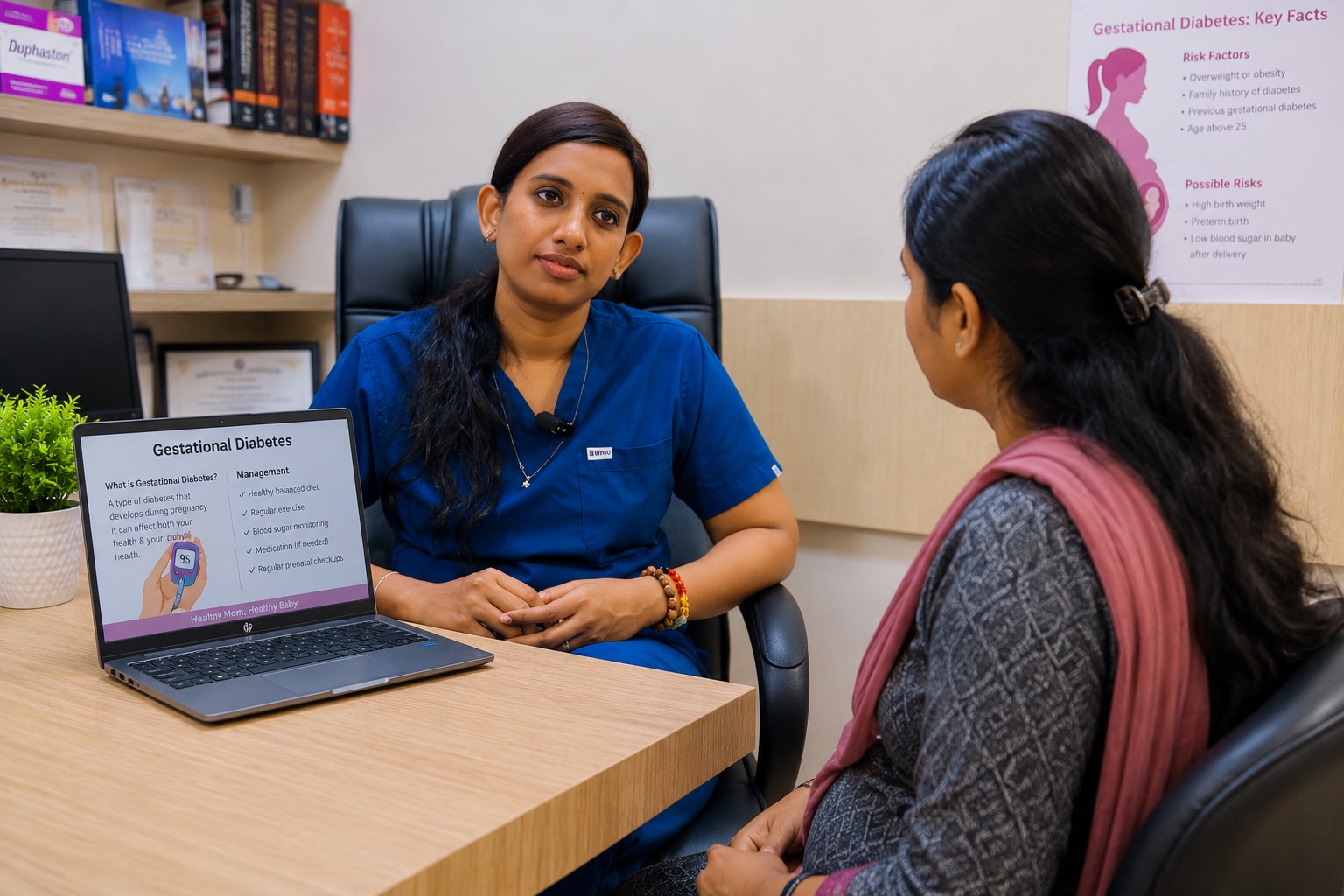
Gestational diabetes is a type of diabetes that develops during pregnancy in women who did not have diabetes before becoming pregnant. It occurs when the body cannot produce enough insulin to meet the increased demands of pregnancy, causing blood sugar levels to rise above normal.
Gestational diabetes in Chennai is increasingly common due to dietary patterns, lifestyle factors, and a genetic predisposition among the South Indian population. At Kavin Maternity and Fertility Clinic, our team screens every pregnant patient for gestational diabetes as a routine part of antenatal care.
Who Is at Risk of Gestational Diabetes?
Any pregnant woman can develop gestational diabetes, but certain factors increase the risk. Understanding your risk helps ensure timely screening and early intervention.
Higher risk factors include:
Being overweight or obese before pregnancy increases the body’s resistance to insulin, making it harder for blood sugar levels to stay within normal range during pregnancy.
Having a family history of type 2 diabetes means you may have a genetic tendency toward insulin resistance that becomes more pronounced during pregnancy.
Being above the age of 25 during pregnancy is associated with a higher risk of gestational diabetes compared to younger mothers.
Having had gestational diabetes in a previous pregnancy significantly increases the chance of developing it again in subsequent pregnancies.
Belonging to South Asian, Indian, or Southeast Asian ethnic backgrounds carries a statistically higher risk of gestational diabetes compared to other populations.
Having previously delivered a baby weighing more than 4 kilograms may indicate that blood sugar levels were elevated during the previous pregnancy even if gestational diabetes was not formally diagnosed at that time.
Having polycystic ovary syndrome, commonly known as PCOS, is associated with insulin resistance which increases the risk of gestational diabetes during pregnancy.
Symptoms of Gestational Diabetes
Gestational diabetes often presents with no obvious symptoms, which is why routine screening during antenatal care is so important. However, some women may experience the following signs:
Increased thirst is one of the most common symptoms, where the body tries to dilute excess blood sugar by drawing water from tissues, causing constant thirst even when fluids have been consumed.
Frequent urination results from the kidneys working harder to filter excess glucose from the blood, causing more frequent trips to the bathroom than is typical during pregnancy.
Fatigue and tiredness beyond what would normally be expected in pregnancy may occur because the body’s cells are not receiving adequate glucose for energy due to insulin resistance.
Blurred vision can occur when fluctuating blood sugar levels affect the fluid balance in the eye lens, temporarily changing its shape and affecting focus.
Increased hunger may be experienced because even though blood sugar levels are elevated, the body’s cells cannot access the glucose without sufficient insulin, leading to persistent hunger signals.
Recurrent infections particularly urinary tract infections and yeast infections may occur more frequently when blood sugar levels are consistently elevated, as higher glucose levels create an environment where bacteria and fungi thrive.
It is important to note that many women with gestational diabetes feel completely well and have no noticeable symptoms at all. This is why the glucose tolerance test between 24 and 28 weeks of pregnancy is a standard and essential part of antenatal care.
How Is Gestational Diabetes Diagnosed?
At Kavin Maternity and Fertility Clinic, gestational diabetes is screened and diagnosed through a systematic process during routine antenatal care.
Initial Screening — Glucose Challenge Test
Between 24 and 28 weeks of pregnancy, a glucose challenge test is performed. You are given a glucose drink and your blood sugar is tested one hour later. If the result is above the normal threshold, a follow-up diagnostic test is arranged.
Confirmatory Test — Oral Glucose Tolerance Test (OGTT)
The oral glucose tolerance test is the definitive diagnostic test for gestational diabetes. You fast overnight and a fasting blood sugar is taken in the morning. You are then given a glucose drink and blood sugar levels are measured at one hour and two hours after the drink. If two or more readings are above the normal threshold, gestational diabetes is confirmed.
Early Screening
Women with multiple risk factors may be screened earlier in the first trimester rather than waiting until 24 weeks.
Risks of Untreated Gestational Diabetes
If gestational diabetes in Chennai is not identified and managed properly, it can lead to complications for both the mother and the baby. This is why regular screening and expert management are essential.
Risks to the baby:
A baby born to a mother with uncontrolled gestational diabetes may grow larger than normal, a condition called macrosomia. Babies weighing more than 4 kilograms are at higher risk of birth injuries and may require delivery by caesarean section.
After delivery, the baby’s blood sugar may drop suddenly because it has been producing extra insulin in response to the mother’s elevated blood sugar throughout pregnancy. This condition is called neonatal hypoglycaemia and requires immediate medical attention.
Babies born to mothers with gestational diabetes have a higher risk of developing breathing difficulties immediately after birth.
There is also a long-term risk that children born to mothers with gestational diabetes may develop obesity and type 2 diabetes later in life.
In severe and unmanaged cases, the risk of stillbirth increases if gestational diabetes is left untreated throughout pregnancy.
Risks to the mother:
Women with gestational diabetes are at increased risk of developing preeclampsia, a serious pregnancy complication characterised by high blood pressure and protein in the urine.
The risk of requiring a caesarean section is higher in women with gestational diabetes due to the larger size of the baby.
Women who develop gestational diabetes during pregnancy have a significantly higher risk of developing type 2 diabetes later in life. Research shows that approximately 50 percent of women with gestational diabetes will develop type 2 diabetes within 10 years if no preventive action is taken after delivery.
How Is Gestational Diabetes Managed?
The good news is that gestational diabetes in Chennai can be effectively managed with the right medical support, dietary changes, and lifestyle modifications. At Kavin Maternity and Fertility Clinic, we provide a comprehensive and personalised management plan for every patient diagnosed with gestational diabetes.
Blood Sugar Monitoring
Self-monitoring of blood glucose levels at home is a central part of gestational diabetes management. You will be shown how to use a glucometer to check your blood sugar levels at specific times of the day, typically before and after meals. These readings help your doctor assess how well your blood sugar is being controlled and whether any adjustments to your management plan are needed.
Dietary Management
Diet is the first and most important treatment for gestational diabetes. A personalised dietary plan is created with the following principles:
Eating smaller, more frequent meals throughout the day instead of three large meals helps prevent blood sugar spikes after eating.
Reducing refined carbohydrates such as white rice, white bread, sweets, sugary drinks, fruit juices, and processed foods is essential because these foods cause rapid rises in blood sugar.
Increasing fibre intake through vegetables, whole grains, legumes, and fruits (in appropriate portions) helps slow the absorption of glucose into the bloodstream.
Including adequate protein in every meal from sources such as eggs, lentils, paneer, chicken, and fish helps stabilise blood sugar levels.
Staying well hydrated with water and avoiding sugary drinks entirely is important for blood sugar management.
Physical Activity
Gentle, regular physical activity helps the body use insulin more effectively and naturally lowers blood sugar levels. Walking for 20 to 30 minutes after meals is one of the most effective and safe ways to manage blood sugar during pregnancy. Your doctor will advise on appropriate exercises based on your specific stage of pregnancy and overall health.
Medication and Insulin Therapy
In cases where diet and lifestyle changes alone are not sufficient to control blood sugar levels, medication may be required. Metformin tablets may be prescribed in some cases. If blood sugar levels remain elevated despite dietary changes and medication, insulin injections may be needed. Insulin is safe to use during pregnancy and does not cross the placenta to affect the baby. Your doctor will teach you how to administer insulin at home if it is required.
Regular Antenatal Monitoring
Women with gestational diabetes require more frequent antenatal visits than those without the condition. Additional ultrasound scans are performed to monitor the baby’s growth and check for any signs of macrosomia. Doppler scans may be used to assess blood flow between the mother and baby. Foetal heart rate monitoring is also performed more frequently as the pregnancy progresses.
Delivery Planning
The timing and method of delivery will be discussed and planned carefully based on how well blood sugar has been controlled throughout pregnancy, the size of the baby, and any other pregnancy factors. Many women with well-managed gestational diabetes are able to have a normal vaginal delivery.
After Delivery — What Happens Next?
Gestational diabetes typically resolves after delivery in most cases. However, ongoing monitoring is essential.
Blood sugar levels are checked in the mother after delivery to confirm they have returned to normal. The baby’s blood sugar is also monitored closely in the first 24 hours after birth.
A follow-up glucose tolerance test is recommended 6 to 12 weeks after delivery to confirm that blood sugar levels have returned to the normal range.
Women who have had gestational diabetes should have their blood sugar tested annually thereafter as they carry a higher lifetime risk of developing type 2 diabetes.
Long-term lifestyle modifications including maintaining a healthy weight, following a balanced diet, and staying physically active significantly reduce the risk of developing type 2 diabetes after gestational diabetes.
Tips for Preventing Gestational Diabetes
While gestational diabetes cannot always be prevented, the following measures reduce the risk, particularly for women who are planning a pregnancy or in the early stages of pregnancy.
Reaching and maintaining a healthy body weight before conception reduces insulin resistance and significantly lowers the risk of developing gestational diabetes.
Following a balanced diet low in refined carbohydrates and high in fibre, protein, and healthy fats prepares the body for the metabolic demands of pregnancy.
Staying physically active before and during pregnancy improves insulin sensitivity and helps maintain healthy blood sugar levels.
Managing PCOS effectively before pregnancy with medical treatment and lifestyle changes reduces the associated risk of gestational diabetes.
Attending all scheduled antenatal appointments ensures that any rise in blood sugar is caught early and managed before it causes complications.
Why Choose Kavin Maternity and Fertility Clinic for Gestational Diabetes Care in Chennai?
Kavin Maternity and Fertility Clinic provides comprehensive care for gestational diabetes in Chennai with a patient-centred approach that combines expert medical management with personalised dietary and lifestyle guidance.
Our experienced obstetrician Dr. Nivedha Arunachalam has expertise in managing high-risk pregnancies including gestational diabetes. Every patient receives a personalised blood sugar monitoring plan, dietary guidance specific to South Indian food habits, regular growth scans and foetal monitoring, and a detailed delivery plan designed for the safest possible outcome for mother and baby.
We understand that a diagnosis of gestational diabetes can feel overwhelming. Our team provides the information, support, and expert care needed to navigate gestational diabetes confidently and deliver a healthy baby.
Book Your Appointment Today
If you are pregnant and concerned about gestational diabetes in Chennai, or if you would like to be screened as part of your antenatal care, contact Kavin Maternity and Fertility Clinic today.
Early diagnosis and expert management make a significant difference in outcomes for both mother and baby.
Call us on 073583 17293 or visit kavinclinic.com to book your antenatal consultation with our specialist team in Tambaram, Chennai.