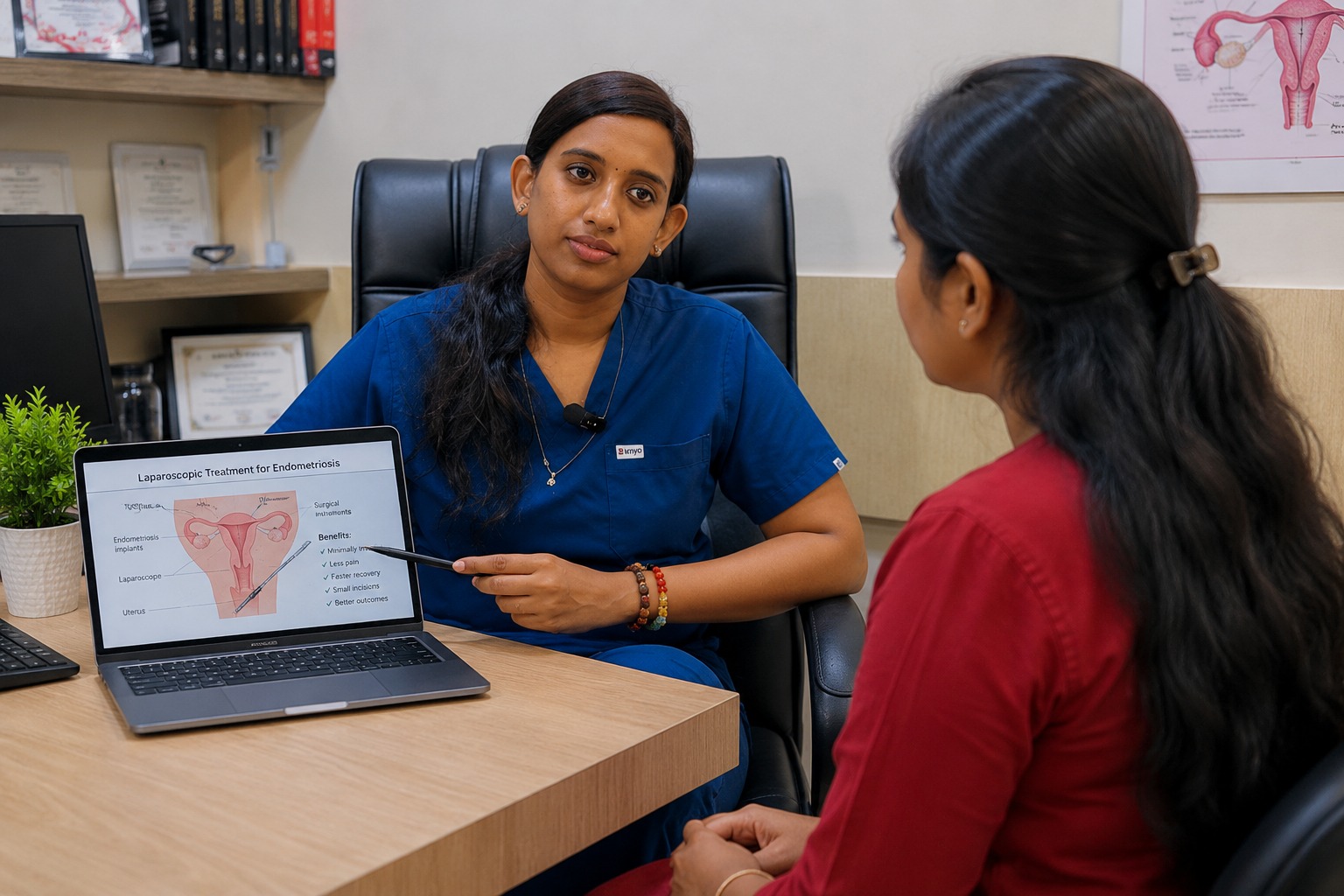
Endometriosis is a common yet often underdiagnosed condition that affects women during their reproductive years. At Kavin Maternity & Fertility Clinic, we offer comprehensive evaluation, advanced laparoscopic management, fertility-preserving treatment, and long-term care for women with endometriosis. Early diagnosis and individualized treatment can significantly improve pain, quality of life, and fertility outcomes.
What Is Endometriosis?
Endometriosis is a chronic inflammatory condition in which tissue similar to the lining of the uterus (endometrium) grows outside the uterine cavity.
These lesions commonly affect the:
- Ovaries
- Fallopian tubes
- Pelvic peritoneum
- Uterosacral ligaments
- Bladder
- Bowel (deep infiltrating endometriosis)
- Occasionally, other organs
Like the uterine lining, these implants respond to hormonal changes during the menstrual cycle. This can lead to inflammation, scarring (adhesions), ovarian endometriomas (“chocolate cysts”), and chronic pelvic pain.
Symptoms of Endometriosis
Symptoms vary widely. Some women have severe disease with minimal symptoms, while others experience debilitating pain despite mild disease.
Common symptoms include:
- Severe painful periods (Dysmenorrhoea)
- Chronic pelvic pain
- Pain during or after sexual intercourse
- Pain during bowel movements, especially during menstruation
- Pain while passing urine during menstruation
- Heavy menstrual bleeding or irregular periods
- Bloating and abdominal discomfort
- Fatigue
- Difficulty conceiving (Infertility)
Important: Severe menstrual pain is not normal. If your symptoms interfere with work, daily activities, or quality of life, you should seek evaluation by a gynaecologist.
Stages of Endometriosis
The American Society for Reproductive Medicine (ASRM) classifies endometriosis into four stages based on the extent, location, depth of implants, adhesions, and ovarian involvement.
Stage I – Minimal
- Few superficial implants
- Little or no adhesions
Stage II – Mild
- More superficial and some deeper implants
- Minimal adhesions
Stage III – Moderate
- Deep implants
- Small ovarian endometriomas
- Moderate adhesions
Stage IV – Severe
- Large ovarian endometriomas
- Extensive deep infiltrating disease
- Dense pelvic adhesions involving surrounding organs
Important: The stage of endometriosis does not always correlate with the severity of pain or infertility.
How Is Endometriosis Diagnosed?
Diagnosis begins with a detailed clinical assessment.
Evaluation may include:
- Medical history
- Pelvic examination
- Transvaginal ultrasound (especially for ovarian endometriomas and deep endometriosis)
- MRI scan (selected cases with suspected deep infiltrating disease)
- Diagnostic laparoscopy with histopathological confirmation (when indicated)
While laparoscopy has traditionally been regarded as the diagnostic gold standard, modern high-quality ultrasound performed by experienced clinicians can diagnose many forms of endometriosis without surgery. Surgery is generally reserved when the diagnosis remains uncertain, symptoms persist despite treatment, or operative management is planned.
Treatment Options
Treatment depends on:
- Age
- Severity of symptoms
- Stage of disease
- Desire for pregnancy
- Previous treatments
Medical Treatment
Medical therapy aims to reduce pain by suppressing ovulation and menstrual activity. It controls symptoms but does not permanently cure endometriosis.
Options include:
- Combined oral contraceptive pills
- Progestins (e.g., Dienogest)
- Levonorgestrel intrauterine system (LNG-IUS)
- GnRH agonists
- GnRH antagonists (selected patients with add-back therapy)
Laparoscopic Surgery
Laparoscopic surgery is recommended for selected women with persistent pain, ovarian endometriomas, deep infiltrating disease, or infertility where surgery is appropriate.
Benefits include:
- Excision or ablation of endometriosis
- Removal of ovarian endometriomas when indicated
- Adhesiolysis
- Restoration of pelvic anatomy
- Fertility preservation whenever possible
Our goal is to relieve symptoms while preserving ovarian reserve and reproductive potential.
Fertility Treatment
Endometriosis can affect fertility through several mechanisms, including:
- Distorted pelvic anatomy
- Adhesions
- Altered tubo-ovarian relationship
- Reduced ovarian reserve (in some women)
- Chronic pelvic inflammation
Depending on age, ovarian reserve, disease severity, and duration of infertility, treatment may include:
- Ovulation induction
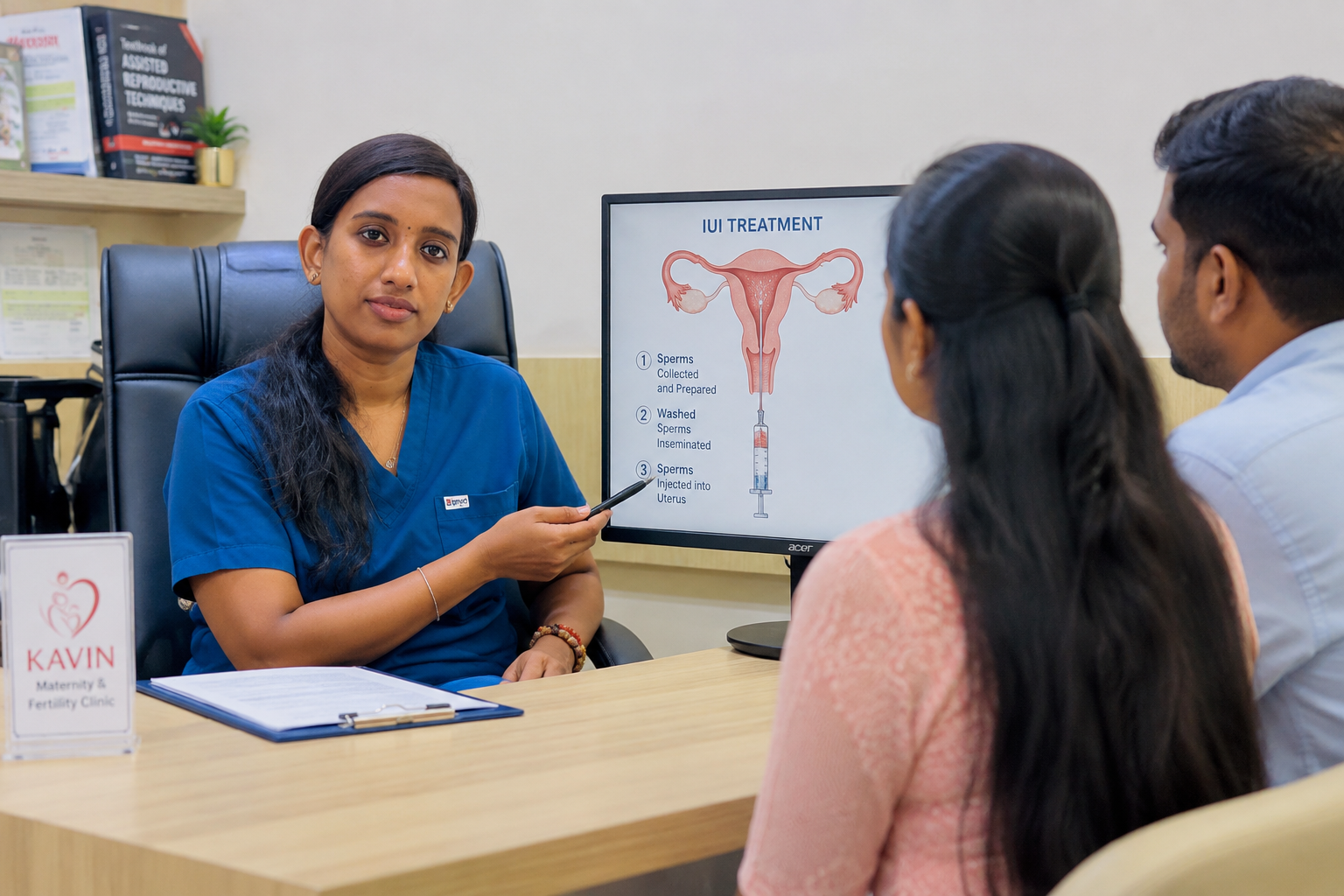
- Intrauterine insemination (IUI)
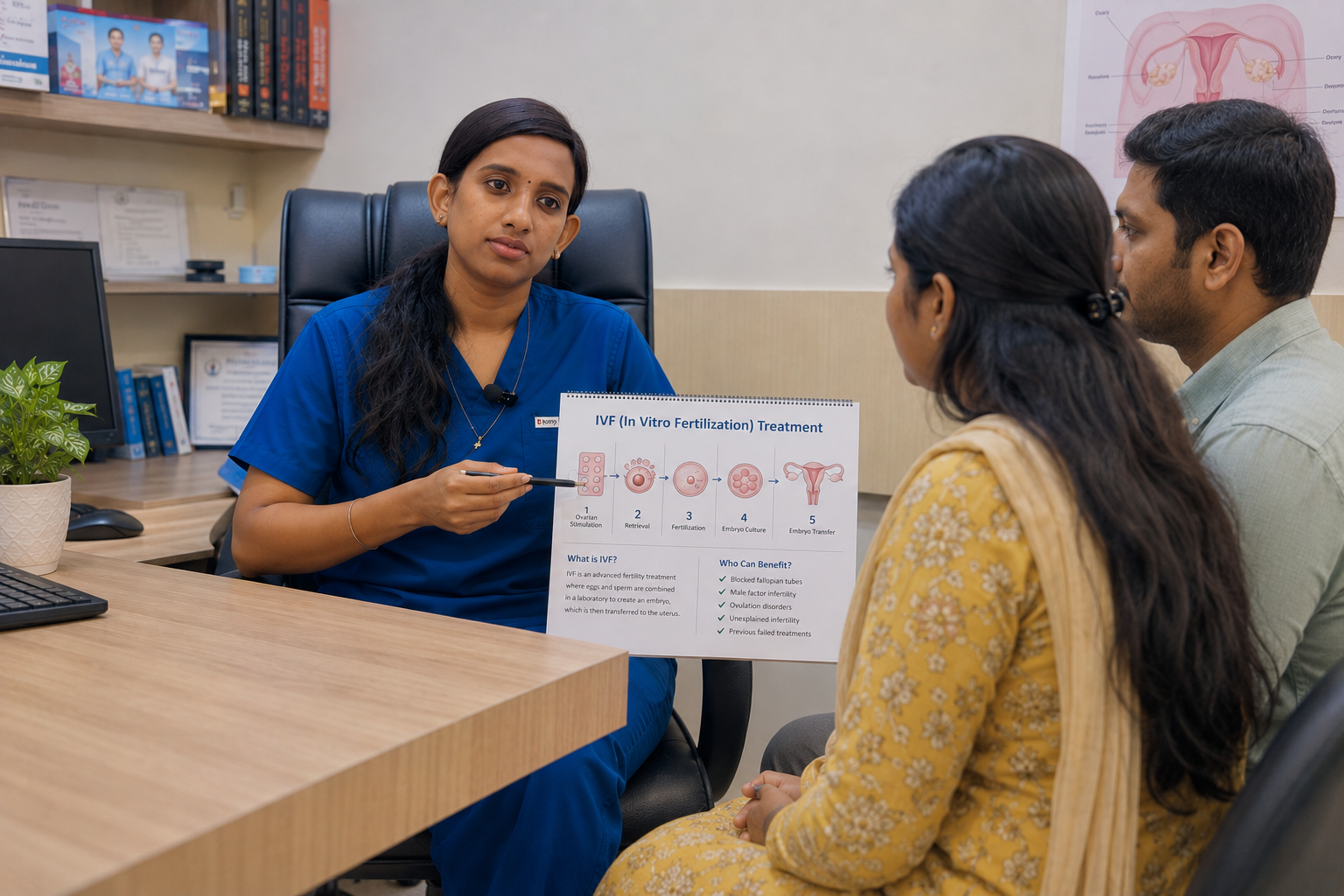
- In vitro fertilization (IVF)
A personalized fertility plan is developed for every couple.
Pain Management
Pain management may include:
- NSAIDs
- Hormonal therapy
- Physiotherapy (selected patients)
- Lifestyle modifications
- Regular follow-up
Endometriosis and Fertility
Approximately 30–50% of women with endometriosis may experience infertility.
However, many women with endometriosis conceive naturally, while others achieve successful pregnancies with appropriate fertility treatment.
Early diagnosis and individualized management improve reproductive outcomes.
Why Choose Kavin Maternity & Fertility Clinic?
At Kavin Maternity & Fertility Clinic, we provide compassionate, evidence-based care tailored to every woman’s needs.
Why patients choose us:
- Experienced obstetrician, gynaecologist, fertility specialist, and laparoscopic surgeon
- Comprehensive evaluation and diagnosis
- Advanced laparoscopic surgery
- Fertility-preserving treatment strategies
- Personalized treatment plans
- Compassionate, patient-centred care
- Long-term follow-up and support
Book Your Consultation
If you’re experiencing severe menstrual pain, chronic pelvic pain, painful intercourse, or difficulty conceiving, don’t ignore your symptoms.
Early diagnosis and expert treatment can relieve pain, protect fertility, and improve your quality of life.
Kavin Maternity & Fertility Clinic
+91 73583 17293