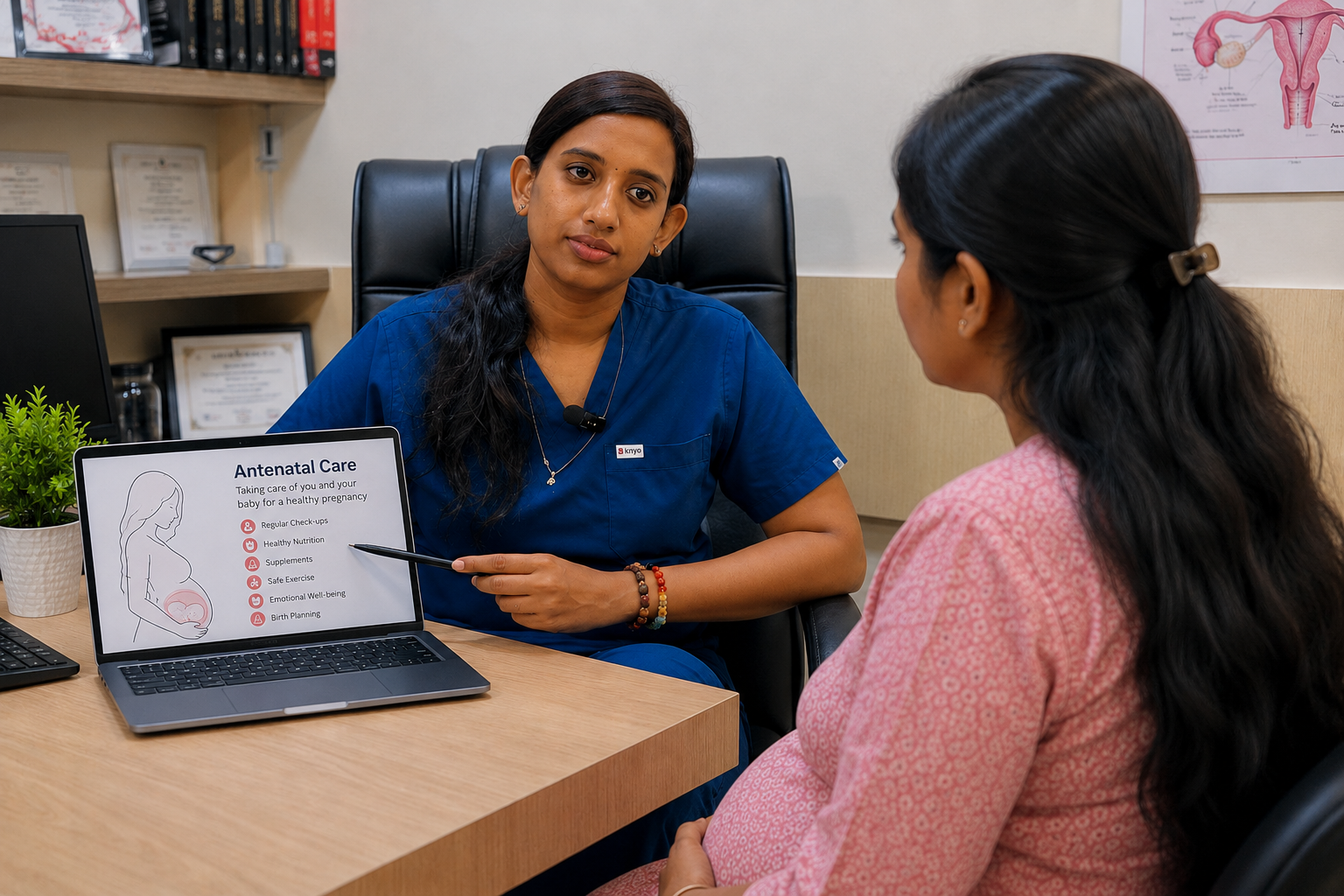
Pregnancy is a beautiful journey, and regular antenatal care plays a vital role in ensuring the health and well-being of both mother and baby. At Kavin Maternity & Fertility Clinic, we provide comprehensive, evidence-based antenatal care with personalized support from early pregnancy until delivery.
What Is Antenatal Care?
Antenatal care refers to the medical care, monitoring, education, and support provided throughout pregnancy. Regular check-ups help monitor your baby’s growth, detect potential complications early, and prepare you for a safe pregnancy and childbirth.
When Should You Start Antenatal Care?
Ideally, your first antenatal visit should be scheduled as soon as pregnancy is confirmed, preferably before 10 weeks of pregnancy.
Early booking allows your obstetrician to:
- Confirm the pregnancy
- Estimate your due date
- Assess your overall health
- Identify risk factors
- Plan investigations and vaccinations
- Begin appropriate nutritional supplements
What Happens During Antenatal Visits?
At each visit, your doctor may assess:
- Blood pressure
- Weight (BMI is usually calculated at the first visit)
- Urine (protein and sugar)
- Baby’s growth (fundal height after approximately 24 weeks)
- Fetal heart rate (after it becomes detectable)
- Fetal movements (later in pregnancy)
- Review of symptoms and any concerns
- Diet, exercise, medications, and lifestyle advice
Routine blood tests and ultrasound scans are performed at appropriate stages of pregnancy.
Antenatal Scan Schedule
Ultrasound scans are an important part of pregnancy care.
Typical scans include:
Dating Scan (8–12 weeks)
- Confirm pregnancy viability
- Estimate gestational age
- Calculate the expected due date
- Identify multiple pregnancy
NT Scan / First Trimester Screening (11–13+6 weeks)
- Nuchal translucency measurement
- Screening for chromosomal abnormalities
- Early fetal anatomy assessment
Anomaly Scan (18–22 weeks)
- Detailed assessment of fetal organs
- Placental location
- Amniotic fluid
- Fetal growth
Growth Scan (28–32 weeks, when indicated)
- Fetal growth
- Amniotic fluid
- Baby’s position
- Placental function
Doppler Ultrasound (when medically indicated)
Assesses blood flow between the placenta and the baby, particularly in high-risk pregnancies.
Routine Blood Tests During Pregnancy
Important investigations may include:
- Complete blood count (CBC)
- Blood group and Rh typing
- Blood sugar screening (including screening for gestational diabetes between 24–28 weeks)
- Thyroid function (when indicated)
- HIV
- Hepatitis B
- Hepatitis C
- Syphilis (VDRL/RPR)
- Rubella immunity
- Urine routine and culture
TORCH testing is not recommended routinely and is performed only when clinically indicated.
High-Risk Pregnancy Care
Some pregnancies require closer monitoring.
High-risk factors include:
- Maternal age ≥35 years
- Twins or higher-order multiple pregnancy
- Diabetes
- Hypertension
- Thyroid disorders
- Previous miscarriage or preterm birth
- Previous Caesarean section (when clinically relevant)
- Fetal growth restriction
- Placental abnormalities
- Previous pregnancy complications
We provide individualized surveillance and management for high-risk pregnancies.
Nutrition During Pregnancy
A healthy diet supports both maternal health and fetal development.
Key nutrients include:
- Folic acid – Helps prevent neural tube defects
- Iron – Prevents and treats anaemia
- Calcium – Supports fetal bone development
- Vitamin D – Supports bone and immune health
- Protein – Essential for fetal growth
- Omega-3 fatty acids (DHA) – Supports brain and eye development
Your doctor will recommend supplements based on your individual needs.
Common Pregnancy Discomforts
Most pregnancy symptoms are normal and can often be managed with simple measures.
Morning sickness
- Eat small, frequent meals
- Stay hydrated
- Avoid foods that trigger nausea
Back pain
- Maintain good posture
- Gentle stretching and pregnancy-safe exercise
Heartburn
- Eat smaller meals
- Avoid lying down immediately after eating
Leg swelling
- Elevate your legs
- Stay active
- Wear comfortable footwear
Fatigue
- Get adequate rest
- Eat a balanced diet
- Stay physically active as advised
Warning Signs During Pregnancy
Seek immediate medical attention if you experience:
- Heavy vaginal bleeding
- Leakage of fluid from the vagina
- Severe abdominal pain
- Severe headache or blurred vision
- Sudden swelling of the face or hands
- Reduced or absent fetal movements (after 28 weeks)
- Fever
- Difficulty breathing
- Persistent vomiting
- Convulsions
Why Choose Kavin Maternity & Fertility Clinic?
At Kavin Maternity & Fertility Clinic, we provide compassionate, comprehensive maternity care tailored to every stage of pregnancy.
Our services include:
- Experienced obstetrician and gynaecologist
- Personalized antenatal care
- High-risk pregnancy management
- Comprehensive pregnancy counselling
- Evidence-based maternity care
- Comfortable and supportive environment
- Conveniently located in Tambaram, Chennai
Book Your Antenatal Appointment
Whether this is your first pregnancy or you’re expecting again, we’re here to support you every step of the way.
Kavin Maternity & Fertility Clinic
+91 73583 17293